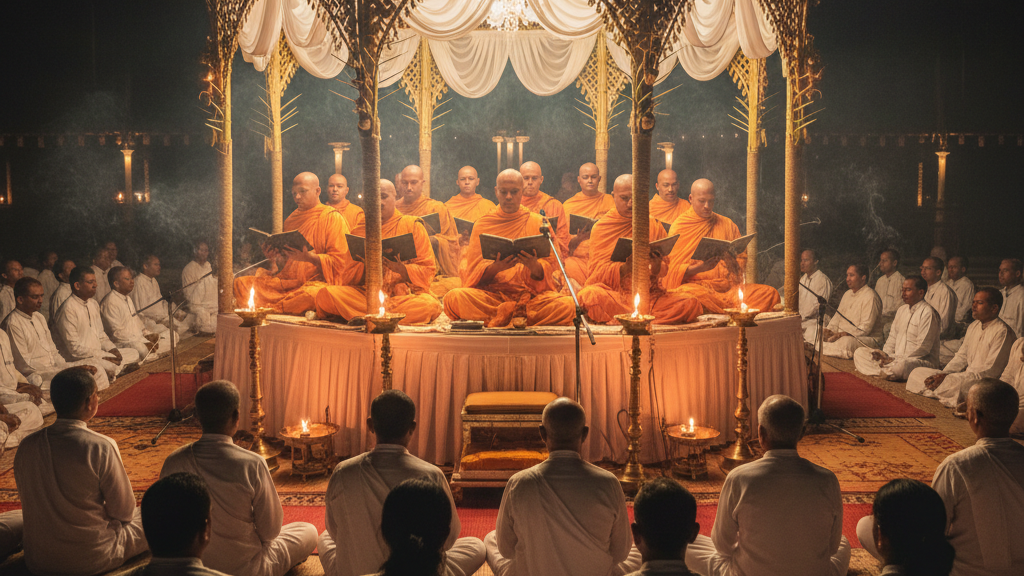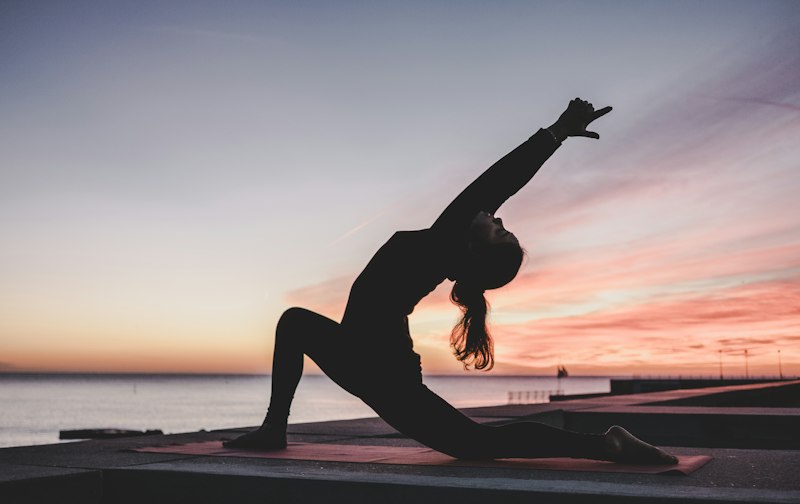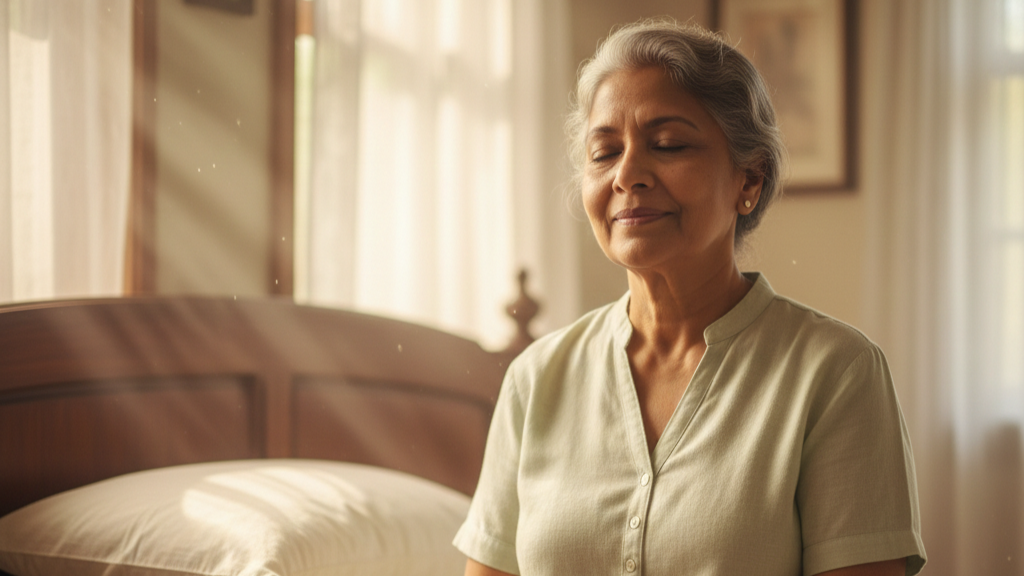
Sri Lanka holds a unique position in global wellness: it's the only country where an unbroken Theravada Buddhist meditation tradition meets an unbroken Ayurvedic medical tradition. Both systems have been practised continuously on the island for over 2,000 years. And they were always meant to work together.
The Historical Connection
When Buddhism arrived in Sri Lanka in the 3rd century BCE, Ayurvedic medicine was already established. Buddhist monks adopted and preserved Ayurvedic knowledge — monastery hospitals became centres of medical learning, and the monk-physician tradition developed. The Mahavamsa (the Great Chronicle of Sri Lanka) records monasteries with dedicated hospitals, herbal gardens, and treatment programmes that combined meditation with Ayurvedic remedies.
Today, Sri Lanka's traditional medicine system (Deshiya Chikitsa) blends Ayurvedic principles with indigenous herbal knowledge and Buddhist psychology. This integration is natural — Ayurveda treats the body, meditation treats the mind, and both recognise that body and mind are inseparable.
How They Work Together
Dosha Balance and Meditation Style
Ayurveda identifies three body-mind constitutions (doshas): Vata (air/movement), Pitta (fire/transformation), and Kapha (earth/stability). Each dosha responds differently to meditation techniques:
Vata types (anxious, restless, creative): Benefit most from grounding meditation — body scans, walking meditation, and samatha (calm) practices. Stillness-based techniques calm Vata's natural agitation. Warm, quiet environments are ideal.
Pitta types (intense, focused, driven): Benefit most from cooling meditation — metta (loving-kindness), moonlight meditation, and practices that soften the mind's natural intensity. Pitta types often gravitate toward achievement-oriented meditation ('reaching jhana') — Ayurvedic wisdom suggests they need the opposite: effortless, non-striving practices.
Kapha types (calm, steady, sometimes lethargic): Benefit most from energising meditation — vigorous breathing (kapalabhati), walking meditation, and open awareness practices that prevent dullness. Kapha types may fall asleep during gentle meditation — active techniques maintain alertness.
Herbal Support for Meditation
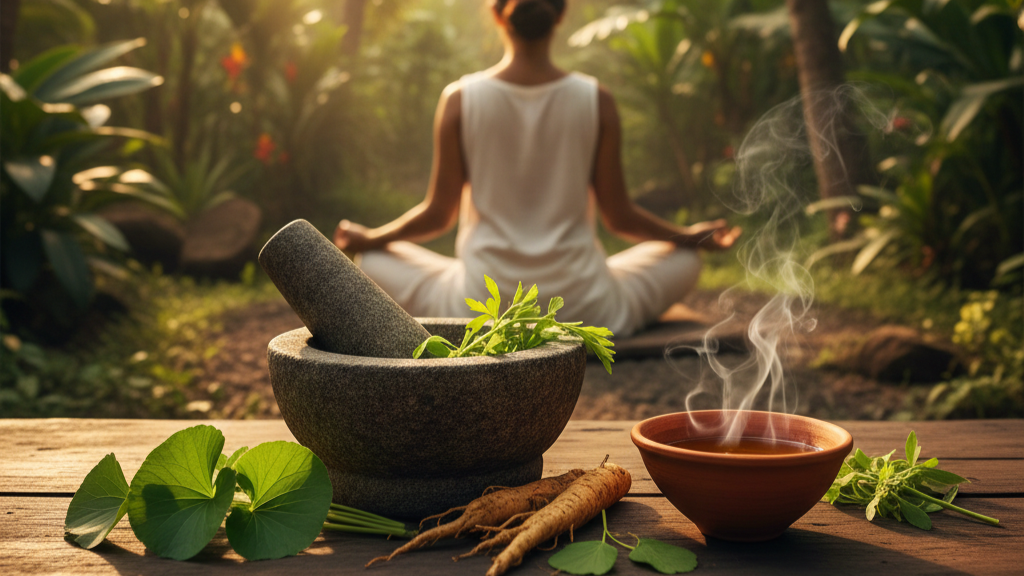
Sri Lankan Ayurvedic practitioners use specific herbs to support meditation practice. Brahmi (Bacopa monnieri) enhances memory and concentration — traditionally given to monks before intensive study and meditation periods. Ashwagandha reduces anxiety and promotes calm alertness — ideal conditions for meditation. Gotukola (Centella asiatica) is Sri Lanka's signature 'meditation herb' — believed to balance the brain's hemispheres and enhance mental clarity. Sri Lankans eat gotukola sambol (a fresh herb salad) daily, and it's specifically recommended for meditators.
Panchakarma and Meditation Retreat
Some Sri Lankan wellness centres combine Ayurvedic panchakarma (detoxification) with meditation retreat programmes. The logic: purify the body first, then the mind settles more easily. After a week of Ayurvedic treatment — herbal oils, steam baths, dietary adjustment — practitioners report that meditation becomes dramatically easier. The body is lighter, the mind is clearer, and concentration develops faster.
Where to Experience Both
Several centres in Sri Lanka offer integrated programmes. Barberyn Reef and Beach Ayurveda Resorts (Beruwala) combine clinical Ayurvedic treatment with yoga and meditation. Siddhalepa Ayurveda Spa (Wadduwa) offers traditional treatment programmes with meditation options. For a more traditional experience, some Buddhist temples with resident Ayurvedic physicians offer combined wellness programmes — particularly in the Kandy hill country region.
For the most authentic experience, combine a stay at an Ayurvedic centre (1-2 weeks) with a meditation retreat (1 week). Start with the Ayurvedic programme to cleanse and balance, then enter retreat with a prepared body and calm mind.
Related: Sri Lanka Meditation Holiday and Best Retreats in Sri Lanka.